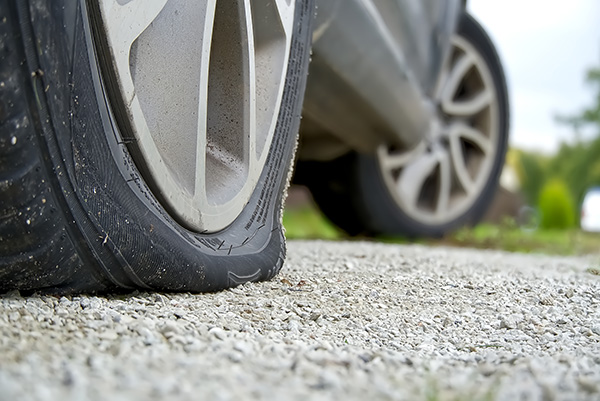
A tire can absolutely keep losing air even when there is no nail, screw, or obvious hole in the tread. That is what makes this kind of problem so frustrating. You add air, everything looks fine for a little while, and then the warning light comes back, or the sidewall starts looking low again.
If there is no puncture, the air is usually escaping from somewhere else in the tire and wheel assembly.
Why It Is Not Always About The Tread
Most people look right at the tread first, which makes sense, but a tire only stays inflated if the whole assembly seals properly. The tire has to seal to the wheel, the valve stem has to hold pressure, and the wheel itself has to be in good condition. If any one of those areas starts leaking, the tire will go low even though the tread looks fine.
That is why a slow leak can be tricky without a proper inspection. The real problem may be around the rim, inside the valve stem, or in damage that is easy to miss.
Valve Stems Cause More Leaks Than People Realize
Valve stems are one of the most common non-puncture leak points. Rubber stems age, dry out, and crack over time. The valve core inside can weaken too, which lets air seep out slowly enough that the tire only looks noticeably low after a few days.
This is the kind of issue that makes drivers think they are imagining things at first. The tire is never completely flat, but it keeps needing air while the others stay fine. When that pattern shows up, the valve stem moves high on the list.
Wheel Corrosion Breaks The Seal
The bead of the tire is supposed to seal tightly against the wheel. Once corrosion forms along that sealing surface, the fit is no longer clean and even. Air starts escaping between the tire and rim, and the tire slowly loses pressure, even though the rubber itself may still be usable.
This happens a lot on older wheels and in places where moisture and road grime wear on the metal over time. A bead leak often keeps coming back until the wheel surface is cleaned up and resealed properly.
Temperature Changes Can Make It Easier To Notice
Temperature affects tire pressure, so a colder morning can definitely make a tire look low. That part is normal. What is not normal is one tire dropping much faster than the others, over and over again.
That is the important difference. The weather will change the pressure in all four tires the same way. If one tire keeps going low by itself, there is usually a leak, sealing problem, or wheel issue behind it.
Potholes And Curbs Can Damage The Wheel
Sometimes the tire loses air because the wheel took the hit, not because the tire was punctured. A pothole or curb impact can bend the rim just enough to disturb the seal. The tire may still look okay, but the wheel is no longer holding air the way it should.
A few common causes include:
- A cracked or aging valve stem
- Corrosion where the tire seals to the rim
- A bent wheel edge after pothole impact
- Bead damage from previous tire service
This is why topping it off again and again is not the same as fixing it.
Why It Should Be Checked Early
Driving on a tire that keeps losing air leads to more problems than most drivers expect. Low pressure affects handling, creates extra heat, shortens tread life, and hurts fuel economy. A tire that might have been saved can end up ruined just from being run low too many times.
During regular maintenance, this kind of problem is much easier to catch before it turns into a roadside flat or premature tire replacement.
What A Proper Leak Check Should Include
A real leak check should cover the tire, wheel, valve stem, and bead seal. That is the only way to know whether the issue is repairable, whether the wheel needs attention, or whether the tire itself is no longer worth saving.
Once the real source is found, the fix is usually straightforward. The important part is not guessing.
Get Tire Leak Repair In Sarasota, FL, With Kaufman's Auto Repair
If one of your tires keeps going low and there is no obvious puncture, Kaufman's Auto Repair in Sarasota, FL, can inspect the tire and wheel assembly, find the source of the air loss, and recommend the right fix.
Bring it in before that slow leak turns into a flat at the worst possible time.