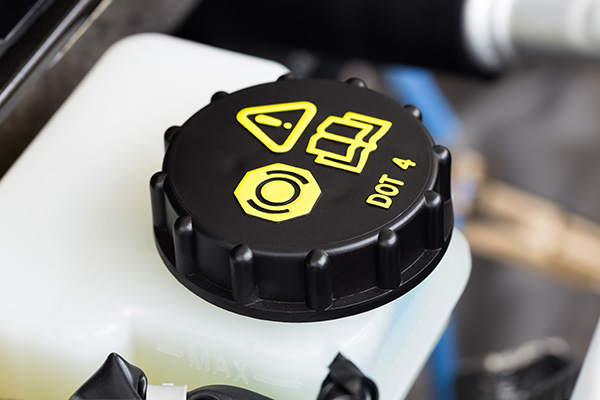
Brake fluid is one of those things most drivers never think about until the brake pedal feels different. The catch is that brake fluid can degrade long before you notice a change behind the wheel. When that happens, braking performance can get less consistent, especially during hard stops, hot weather, or long downhill driving.
Changing brake fluid is about keeping the braking system working the way it was designed to.
What Brake Fluid Actually Does
Brake fluid transfers the force from your foot to the brake calipers. When you press the pedal, the fluid moves through brake lines and builds hydraulic pressure that clamps the pads onto the rotors. Unlike air, fluid does not compress much, which is why a healthy system feels firm and predictable.
Brake fluid also has to handle heat. Brakes convert speed into heat every time you slow down, and that heat travels into the fluid in the calipers. Good fluid resists boiling so the pedal stays consistent when the system gets hot.
Why Brake Fluid Goes Bad Over Time
Brake fluid absorbs moisture from the air. It does not happen overnight, but it happens to every vehicle because seals and hoses are not perfectly airtight forever. As the moisture content rises, the boiling point drops, and that is when a firm pedal can start feeling softer during repeated stops.
Moisture also encourages corrosion inside the braking system. That corrosion can affect calipers, the master cylinder, and ABS components. We see more stuck calipers and rusty bleeder screws on vehicles where the fluid has been ignored for years.
Clues Your Brake Fluid Needs Attention
Sometimes you get a clear symptom. Other times, the fluid looks like the only warning. A few common clues include:
- The brake pedal feels softer than it used to, especially after several stops
- The fluid in the reservoir looks dark instead of light and clear
- You notice braking feels less consistent in hot weather or on long downhills
- A brake caliper or wheel area looks unusually wet or grimy from seepage
- The brake warning light comes on and the fluid level is low
Even if you do not feel anything yet, checking fluid condition is a smart habit. A quick look at color and level can tell you a lot before the system starts acting up.
What Happens If You Put It Off
Old brake fluid can turn a normal braking situation into an unpredictable one. If the fluid boils, it creates vapor, and vapor compresses. That means you can press the pedal farther than expected and still not get the same braking response.
Delaying service can also lead to expensive parts problems. Moisture and corrosion within the system can shorten the life of calipers, hoses, and ABS hydraulic components. You might not connect that future repair to skipped fluid service, but the link is real.
How Often Should Brake Fluid Be Changed
The best answer is to follow your vehicle’s schedule, but most cars benefit from a brake fluid change every couple of years. If you drive in heavy traffic, tow, live in a humid area, or do lots of short trips, the fluid often ages faster. This is one of those items that fits naturally into regular maintenance because it helps protect parts you do not want to replace.
If you are unsure when it was last done, that alone is a reason to check it. Many vehicles lack service records that clearly track brake fluid, and the fluid can go overdue without anyone realizing it. Starting fresh gives you a known baseline going forward.
What A Proper Brake Fluid Service Includes
A real brake fluid service is more than sucking fluid out of the reservoir and topping it off. The goal is to push old fluid out of the lines and replace it with fresh fluid of the correct spec. That usually involves bleeding each wheel so the fluid in the calipers and lines gets renewed, not just the fluid you can see at the top.
During an inspection, our technicians also look for leaks, worn hoses, and caliper issues that can affect pedal feel. If a bleeder screw is seized or a hose is cracked, you want to know that before it becomes a brake pull or a sudden fluid loss. Done the right way, fresh fluid helps the pedal feel consistent and keeps the system healthier over the long term.
Get Brake Fluid Service In Sarasota, FL With Kaufman's Auto Repair
If you’re wondering whether your brake fluid is overdue, the next step is to book service so the system is flushed and refilled correctly. Schedule service at Kaufman's Auto Repair in Sarasota, FL to keep your brakes consistent in traffic, protect expensive hydraulic components, and stay ahead of problems before they show up at the pedal.