At the gas station, it is easy to wonder if premium fuel is the better choice. The label sounds better. The price is higher. The word premium makes it feel like you are giving your car something cleaner, stronger, or more protective.
So does premium gas actually make a difference in a regular car?
For most vehicles that are designed to run on regular unleaded gas, the answer is usually no. Premium fuel is not harmful in most cases, but it also may not give you better mileage, more power, or a longer engine life if your vehicle does not require it.
At our shop, we hear this question often. Some drivers switch to premium because their car is getting older. Others use it before road trips. Some believe it cleans the engine better. Others are trying to fix a rough idle, poor acceleration, or a check engine light. We understand why it seems like an easy upgrade, but the real answer depends on your vehicle and what the owner’s manual says.
What Makes Premium Gas Different?
The main difference between regular and premium gasoline is octane rating. Octane measures how resistant the fuel is to knocking or pinging during combustion.
Knocking happens when the air and fuel mixture inside the engine ignites at the wrong time or in an uncontrolled way. That can create a pinging sound, reduce performance, and in severe cases, damage the engine over time.
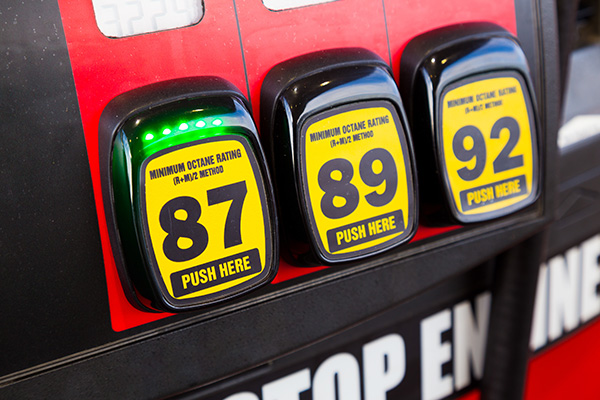
Premium gas has a higher octane rating than regular gas. In many areas, regular is 87 octane, mid-grade is around 89, and premium is often 91 or 93. That higher octane can be important for certain engines, especially engines with high compression, turbochargers, superchargers, or performance tuning.
But higher octane does not mean the fuel has more energy. It does not automatically mean your car will go faster, run cleaner, or last longer. It simply means the fuel is more resistant to knock.
What Happens If Your Car Only Needs Regular Gas?
If your vehicle is built for regular unleaded fuel, the engine computer is already designed to run properly on that fuel. Using premium in that type of car usually does not unlock extra performance because the engine is not designed to take advantage of the higher octane.
In other words, premium gas is not like a stronger vitamin for every vehicle. It is more like a specific tool for engines that need knock resistance.
For a regular car, the engine may run exactly the same on premium as it does on regular. You may not notice better acceleration. You may not see a meaningful improvement in fuel economy. You may simply spend more at the pump.
That does not mean premium is bad. It just may not be necessary.
Required vs Recommended Premium Fuel
The wording in your owner’s manual matters. Some vehicles require premium fuel. Others recommend premium fuel. Some only require regular.
- If your vehicle requires premium, use premium. That engine was designed around higher octane fuel, and using regular may cause knocking, reduced performance, poor efficiency, or long-term engine stress.
- If your vehicle recommends premium, the situation is a little different. The car may run on regular, but premium may help it deliver its best performance, especially during hot weather, heavy acceleration, towing, mountain driving, or other demanding conditions.
- If your vehicle says regular unleaded is acceptable, premium is usually optional and often unnecessary.
When in doubt, check the fuel door label and the owner’s manual. Those are better sources than guesswork, online comments, or what worked in a different vehicle.
Will Premium Gas Improve Fuel Economy?
Sometimes drivers use premium because they hope it will improve miles per gallon. In a vehicle designed for regular gas, the difference is usually small or nonexistent.
If you notice better fuel economy after switching to premium, there may be another reason. Maybe your driving changed. Maybe the weather changed. Maybe you filled up at a different station with better quality fuel. Maybe your tires were recently inflated, or traffic was lighter that week.
Fuel economy depends on many things, including tire pressure, driving habits, oil condition, air filters, spark plugs, alignment, engine temperature, and sensor readings. Premium gas alone is not a cure for poor mileage in a regular car.
If your vehicle suddenly starts using more fuel, we recommend having it inspected instead of trying to solve the problem with a more expensive fuel grade.
Does Premium Gas Clean the Engine Better?
This is another common misunderstanding. Premium fuel does not automatically mean better cleaning power. Detergent additives help keep fuel injectors and intake components cleaner, but octane rating and detergent quality are not the same thing.
Some fuel brands use higher quality additive packages across all grades, including regular. Others may market certain benefits with premium, but that does not mean every regular car needs premium to stay clean.
If fuel system cleanliness is a concern, the best approach is to use good quality fuel, keep up with maintenance, and address drivability problems early. If your vehicle has clogged injectors, carbon buildup, rough running, or hesitation, it needs proper diagnosis. Premium gas may not fix the root cause.
Can Premium Gas Fix Engine Knocking?
If your car is knocking, pinging, or rattling under acceleration, premium gas might reduce the noise in some cases, but that does not mean the issue is solved.
A regular-fuel engine should not need premium to run correctly. If it suddenly does, something may be wrong. Possible causes can include carbon buildup, incorrect spark plugs, overheating, a faulty sensor, poor quality fuel, lean fuel mixture, or ignition timing concerns.
Using premium to hide a new noise can delay the repair your vehicle actually needs. A little pinging may seem harmless, but ongoing combustion issues can lead to bigger problems.
If you hear knocking or pinging, bring the vehicle in so we can inspect it and find out what is really happening.
What If You Accidentally Use the Wrong Fuel?
If your vehicle takes regular gas and you accidentally use premium, there is usually nothing to worry about. You may have spent more than necessary, but the vehicle should be fine.
If your vehicle requires premium and you accidentally use regular, pay attention. Avoid heavy acceleration, towing, high speeds, or hard driving until you can refill with the correct fuel. Many modern vehicles can adjust timing to help protect the engine, but performance and efficiency may drop. If you hear knocking, notice warning lights, or the vehicle runs poorly, have it checked.
If you accidentally put diesel in a gasoline vehicle, or gasoline in a diesel vehicle, do not drive it. That is a different situation and can cause serious damage. The vehicle should be towed and the fuel system should be addressed properly.
When Premium Gas May Be Worth It
Premium gas is worth it when your vehicle requires it. It may also be worth it when the manufacturer recommends it and you want the best performance the vehicle was designed to deliver.
You may also choose premium temporarily in certain recommended-fuel vehicles when you are driving in demanding conditions. That might include towing, steep hills, extreme heat, or repeated heavy acceleration.
For a regular commuter car that only calls for 87 octane, premium is usually not the best use of your maintenance budget. You will likely get more value from oil changes, filters, tire care, spark plugs, fluid services, and regular inspections.
Spend Money Where It Actually Helps
We never want customers to waste money at the pump because of a common myth. Premium gas is not better for every car. It is better for engines that need higher octane. For most regular cars, the smartest choice is to use the fuel grade recommended by the manufacturer and keep the vehicle properly maintained.
For all your automotive needs, schedule an appointment with Kaufman's Auto Repair in Sarasota, FL today. We will help you understand what your car really needs, avoid unnecessary guesswork, and keep your vehicle running its best.