The engine revs climb, but the car doesn't pick up speed the way you expect. On another drive, the complaint feels more like a brief vibration while cruising. Both can be described as transmission slipping, even though they happen under different conditions and may require different repairs.
Before approving a transmission job, describe when the change occurs. Is the car shifting gears, starting from a stop, or holding a steady speed? That detail helps separate a gear-holding problem from a torque converter clutch concern, an engine misfire, or normal operation that feels unfamiliar.
The Torque Converter Is Part of the Transmission System
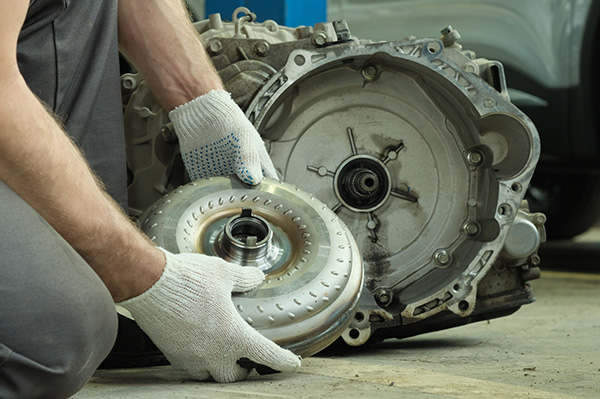
On a conventional automatic, the torque converter transfers engine power into the transmission through fluid. Its lockup clutch can connect the engine more directly to the transmission under selected conditions. That arrangement is different from the gear clutches that hold the transmission's individual ratios.
Some converter slip is intentional when the lockup clutch is released, and some systems deliberately control a small amount while it operates. Engine speed changing without an identical road-speed change therefore isn't automatic proof of failure. You need to consider the gear, lockup command, load, and design together.
A Flare During a Gear Change Points Toward Shift Control
A flare is a rise in engine speed during a shift without the expected increase in vehicle speed. It can happen when the next clutch doesn't apply quickly or firmly enough. Low fluid, a pressure leak, valve-body trouble, or worn clutch components can all interfere with that handoff.
Notice whether it happens on the same shift each time and whether it changes after the transmission is warm. Those details help identify the circuit involved. A flare does not prove the entire transmission needs rebuilding, but repeatedly applying more throttle through it can create additional heat and wear in slipping components.
Converter Clutch Shudder Can Appear During Steady Cruising
A lockup-clutch concern can feel like a vibration during light acceleration or steady road speed, rather than a clear flare between gears. Some drivers compare it to briefly crossing a rough strip of pavement. The engine speed may fluctuate slightly as the clutch struggles to apply consistently.
We compare that sensation with converter-clutch commands and available slip data during the event. Engine misfires and driveline vibrations can feel similar. A shudder that occurs during lockup is a reason to test the converter circuit, not permission to condemn the converter without checking what controls its pressure.
A Converter Fault Can Involve More Than the Clutch
The converter also contains components that direct fluid flow and help transfer power when starting off. Internal damage can affect launch performance, generate noise, or create heat. A vehicle that feels weak from a stop needs those possibilities considered alongside engine output and transmission pressure.
A lockup clutch that fails to release can cause other issues, including struggling or stalling as the vehicle stops. Neither symptom should be reproduced by an owner with improvised brake-and-throttle tests. The correct diagnostic procedure limits load and temperature while checking whether the problem is mechanical, hydraulic, or electronic.
Fluid and Hydraulic Controls Can Link the Two Problems
The transmission and converter share fluid and control circuits. A worn valve or pressure leak can affect converter-clutch operation even if the converter wasn't the original cause. Likewise, damage inside either assembly can contaminate the rest of the system. The choice isn't always one component or the other.
Establish the correct fluid level and specification before drawing conclusions. Pan debris and the fluid's condition add evidence when removal is justified. Fresh fluid may be part of a repair, but it cannot rebuild damaged friction material. An additive should not replace diagnosis when the car is already slipping or shuddering.
The Road Test Needs More Than Engine RPM
A useful inspection compares commanded gear, input and output speeds, converter-clutch operation, temperature, and engine behavior where the vehicle provides those readings. A ratio that cannot be held differs from a converter clutch that isn't responding as commanded. The test results should explain why a particular repair is recommended.
Bring records of regular maintenance and any recent transmission work. Report delayed engagement, warning messages, or whether the complaint appeared after a fluid service. If the car loses drive, slips severely, or displays an overheating warning, stop using it and arrange transport. A transmission that moves again after cooling doesn't mean it is repaired.
Get Transmission And Torque Converter Diagnostics In Sarasota, FL, With Kaufman's Auto Repair
Kaufman's Auto Repair in Sarasota, FL, can compare the shifting complaint with engine, hydraulic, and converter-clutch operation before recommending transmission work.
Contact us to schedule a diagnostic visit and describe when the slipping or shudder occurs.